1 Minute Bite Sized Health
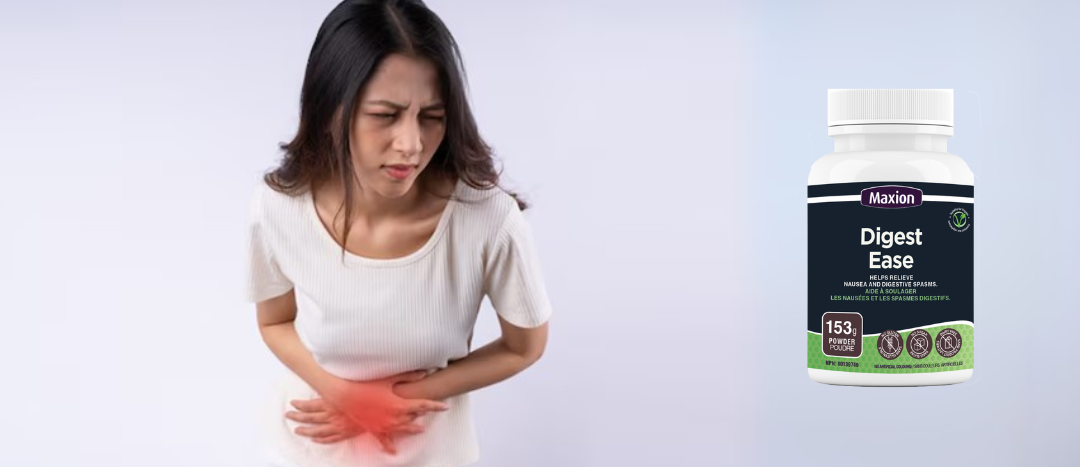

Digest Support: Because a Happy Gut Means a Happier You
Bloating, nausea, loss of appetite, even a small digestive issue can throw off your entire day. That’s why Maxion’s Digestive Support Capsules combine three time-tested herbs: organic ginger, peppermint, and sweet fennel, to gently relieve discomfort and restore digestive balance, naturally. Plant-Based Ingredients that Target Digestive Upset Organic Ginger Root (Zingiber officinale) For centuries, ginger has been trusted across cultures as a remedy for nausea, indigestion, and upset stomach. Its active compounds, including gingerol and shogaol, help relax the muscles in your gastrointestinal tract and promote smoother digestion. Clinical trials support its effectiveness for relieving nausea, improving gastric emptying, and easing mild cramping and loss of appetite (Lien et al., 2003). Organic Peppermint Leaf (Mentha x piperita) Peppermint is a natural carminative meaning it helps calm gas and bloating. It works by relaxing intestinal muscles, which helps relieve digestive spasms and flatulence. Studies also show peppermint is especially effective for calming functional dyspepsia and colic-like symptoms (Madisch et al., 1999). Organic Sweet Fennel Seed (Foeniculum vulgare) Traditionally used in herbal medicine to relieve gas and promote appetite, sweet fennel helps calm the gut and improve digestion. Its essential oils have been shown to ease intestinal discomfort, reduce bloating, and support smoother digestion, especially after heavy meals (Chumpitazi et al., 2018). Why Capsules Deliver More Comfort Unlike painkillers or ointments that simply mask symptoms, Maxion Digestive Support works from the inside to target the source of your discomfort. The plant-based hypromellose capsule ensures clean delivery without animal byproducts, preservatives or unnecessary fillers. It also dissolves quickly, helping you feel relief faster without upsetting your stomach like some conventional options. Capsules provide excellent stability for herbs, preserve potency, and allow for consistent dosing. That makes them a superior choice to liquid extracts, ointments, or oral analgesics when it comes to managing internal digestive upset. Relief You Can Feel Good About Taken daily or as needed, Maxion Digestive Support can help ease: Nausea from travel, stress or heavy meals Indigestion and dyspepsia Gas, bloating and mild digestive cramping Loss of appetite or colic-like discomfort No synthetic additives. No harsh side effects. Just herbal support that works in harmony with your body. The Bottom Line Don’t let an upset stomach disrupt your day. With gentle support from organic ginger, peppermint and sweet fennel, Maxion Digestive Support Capsules help calm your gut and bring balance back to your digestive system one clean capsule at a time. Soothing, plant-based relief that works when your digestion doesn't. That’s Maxion. References Chumpitazi, B. P., Kearns, G. L., & Shulman, R. J. (2018). Review article: The physiological effects and safety of peppermint oil and its efficacy in irritable bowel syndrome and other functional disorders. Alimentary Pharmacology & Therapeutics, 47(6), 738–752. https://doi.org/10.1111/apt.14519 Lien, H.-C., Sun, W. M., Chen, Y.-H., Kim, H., Hasler, W., & Owyang, C. (2003). Effects of ginger on motion sickness and gastric slow-wave dysrhythmias induced by circular vection. American Journal of Physiology-Gastrointestinal and Liver Physiology, 284(3), G481–G489. https://doi.org/10.1152/ajpgi.00164.2002 Madisch, A., Heydenreich, C. J., Wieland, V., Hufnagel, R., & Hotz, J. (1999). Treatment of functional dyspepsia with a fixed peppermint oil and caraway oil combination preparation as compared to cisapride. A multicenter, reference-controlled double-blind equivalence study. Arzneimittel-Forschung, 49(11), 925–932. https://doi.org/10.1055/s-0031-1300528
Apprendre encore plus
Maxion PABA Plus: The B-Complex Secret for Healthy Hair, Skin and Nutrient Metabolism
When it comes to daily wellness, your B vitamins do much more than most people realize. One B-complex nutrient that deserves more credit is PABA (Para-Aminobenzoic Acid). Known for its traditional reputation as the “anti-grey hair” vitamin, PABA works behind the scenes to help your body metabolize nutrients, support healthy hair follicles, and maintain youthful-looking skin. Maxion Nutrition’s PABA Plus formula takes this one step further. Each daily capsule provides 600 mg of PABA, along with 500 mcg of Vitamin B12 and 45 mg of Vitamin B6. This unique combination works together to help your body get more from your food and supplements, while also protecting your hair and skin at a cellular level. Why PABA Plus Works PABA is a compound that acts like a co-factor for gut bacteria to help synthesize folic acid. It participates in the formation of red blood cells, the health of connective tissue and the pigmentation of hair and skin. When combined with Vitamin B12 and B6, PABA’s benefits go even further. These three nutrients work together to support your body’s natural methylation pathways the process your cells use to turn vitamin Bs into active forms that your body can use for energy, detoxification, and DNA repair. The Power of This Daily Dose Maxion’s PABA Plus formula is dosed for results that match what has been seen in traditional use and modern research. What does science say? PABA (600 mg daily): Studies going back to the 1940s, including findings in the Journal of Investigative Dermatology, observed that PABA supplementation helped some people slow premature greying and maintain hair strength by supporting melanin production. Vitamin B12 (500 mcg daily): B12 is crucial for DNA synthesis and the production of healthy red blood cells. Combined with PABA, B12 helps maximize nutrient metabolism and energy production at the cellular level. Vitamin B6 (45 mg daily): B6 supports over one hundred enzyme reactions in your body. It helps turn food into energy, supports healthy neurotransmitter function and plays a significant role in methylation along with B12 and PABA. Taken together, these three nutrients can help maintain healthy cell turnover, promote healthy hair pigment, and support your body’s daily detox and repair pathways. Why Maxion’s PABA Plus Is Different Not all B-complex blends are created equal. Here is what makes Maxion’s PABA Plus the smart choice for daily hair, skin, and nutrient metabolism support. Clinically Relevant Strength Each capsule delivers a daily dose that matches what research and traditional use recommend — not just trace amounts. Triple-Action Formula PABA, B12 and B6 work together to support healthy hair, clear the skin and optimal nutrient use, so you get more out of what you eat. Pure and Tested Maxion’s PABA Plus is third-party tested to ensure potency, purity, and consistency. No hidden artificial colors, binders, or fillers. What PABA Plus Supports Healthy hair pigment and follicle strength Smooths, clears skin with better cell turnover. More efficient metabolism of other B vitamins and folate Healthy red blood cell production and oxygen transport Daily support for natural detox pathways through better methylation Who Should Take Maxion PABA Plus Maxion’s PABA Plus is ideal for: Adults who notice premature greying or thinning hair. Anyone wanting to support clear, youthful-looking skin. People who want better B-vitamin metabolism and energy balance Individuals who are looking for gentle daily detoxes and cell support. Always check with your healthcare provider if you are pregnant, nursing or taking other B-complex supplements. Daily Tips to Boost Hair, Skin and Nutrient Metabolism Get the most out of PABA Plus with these healthy daily habits. Eat a variety of B-vitamin-rich foods such as eggs, leafy greens, whole grains, and fish. Stay hydrated to help your body detoxify and keep your skin healthy. Manage stress, which can affect hair and skin health. Take your PABA Plus capsule at the same time each day for steady results. Pair it with regular gentle movement to support circulation. The Bottom Line Your B vitamins are the unsung heroes behind your hair, skin, and natural energy. Maxion’s PABA Plus blends 600 mg of PABA, 500 mcg of B12 and 45 mg of B6 to help your body absorb nutrients efficiently and maintain healthy, resilient cells from the inside out. Feed your hair, skin, and cells what they deserve every single day with Maxion PABA Plus. References Allen, J. M., Engenolf, S., & Allen, S. K. (1995). Rapid Reaction of Singlet Molecular Oxygen (1O2) with p-Aminobenzoic Acid (PABA) in Aqueous Solution. Biochemical and Biophysical Research Communications, 212(3), 1145–1151. https://doi.org/10.1006/bbrc.1995.2088 Brandaleone, H., Steele, J. M., & Main, E. (1943). Effect of Calcium Pantothenate and Para-Aminobenzoic Acid on the Gray Hair of Humans. CoLab. https://colab.ws/articles/10.3181%2F00379727-53-14179p Davis, A. Lets Eat Right to Keep Fit. Harcourt, Brace Jovanovich, New York, 1970. Flindt-Hansen, H., Thune, P., & Eeg Larsen, T. (1990). The inhibiting effect of PABA on photocarcinogenesis. Archives of Dermatological Research, 282(1), 38–41. https://doi.org/10.1007/BF00505643 Gilchrest, B. A. (1984). Skin and Aging Processes. Journal of Gerontology, 39(4), 504. https://doi.org/10.1093/geronj/39.4.504a Hauser, G. (1951). Look Younger, Live Longer. Farrar, Straus and Young. Kadhum, W. R., Oshizaka, T., Ichiro, H., Todo, H., & Sugibayashi, K. (2016). Usefulness of liquid-crystal oral formulations to enhance the bioavailability and skin tissue targeting of p-amino benzoic acid as a model compound. European Journal of Pharmaceutical Sciences: Official Journal of the European Federation for Pharmaceutical Sciences, 88, 282–290. https://doi.org/10.1016/j.ejps.2016.04.003 Kordel, L. (1962). Eat and grow younger. World Pub. Co. https://catalog.hathitrust.org/Record/009115264 Liu, S., Chen, Z., Cai, X., Sun, Y., Zhao, C., Liu, F., & Liu, D. (2014). Effects of Dimethylaminoethanol and Compound Amino Acid on D-Galactose Induced Skin Aging Model of Rat. The Scientific World Journal, 2014, 507351. https://doi.org/10.1155/2014/507351 Mahendiratta, S., Sarma, P., Kaur, H., Kaur, S., Kaur, H., Bansal, S., Prasad, D., Prajapat, M., Upadhay, S., Kumar, S., Kumar, H., Singh, R., Singh, A., Mishra, A., Prakash, A., & Medhi, B. (2020). Premature graying of hair: Risk factors, co-morbid conditions, pharmacotherapy and reversal-A systematic review and meta-analysis. Dermatologic Therapy, 33(6), e13990. https://doi.org/10.1111/dth.13990 Pearson, D. (with Internet Archive). (1982). Life extension: A practical scientific approach. New York : Warner Books. http://archive.org/details/lifeextensionpra0000pear Sieve, B. F. (1941). CLINICAL ACHROMOTRICHIA. Science (New York, N.Y.), 94(2437), 257–258. https://doi.org/10.1126/science.94.2437.257 Snyder, D. S., & May, M. (1975). Ability of PABA to protect mammalian skin from ultraviolet light-induced skin tumors and actinic damage. J. Invest. Dermatol.; (United States), 65:6. https://doi.org/10.1111/1523-1747.ep12610349 Zvak, C. The Science of Hair Care, 1986, Marcel Dekker, Inc., New York. Zarafonetis, C. J. D. (1950). Darkening of gray hair during para-amino-benzoic acid therapy. The Journal of Investigative Dermatology, 15(6), 399–401. https://doi.org/10.1038/jid.1950.121
Apprendre encore plus
Understanding Gout: Incidence, Treatment Options, and Nutritional Support
According to the Canadian Arthritis Society, gout is a form of inflammatory arthritis characterized by sudden and severe pain in the joints, often affecting the big toe. Caused by the accumulation of uric acid crystals in the joints, gout primarily affects men but can also occur in women, particularly after menopause. This condition is associated with lifestyle factors such as diet and alcohol consumption, but genetic predispositions and other medical conditions can also increase the risk. In this post, we review the incidence of gout in Canada based on age, gender, ethnicity, and geography. We’ll explore drug and non-drug therapies, with a particular focus on complementary health care strategies such as nutrition, botanical medicines, and vitamin supplementation. Specific attention will be given to the efficacy of celery, stinging nettle, turmeric, and vitamin C, ingredients found in Max Gout Relief, in managing gout symptoms, supported by clinical trial data and dosage recommendations. Gout in Canada: Incidence and Diagnosis by Gender, Age, Ethnicity, and Geography According to The Journal of Rheumatology, gout affects about 4% of the Canadian population, with a higher prevalence among men. The incidence increases with age, particularly in men over the age of 40. Women are less frequently affected but see a rise in gout diagnoses after menopause due to hormonal changes that influence uric acid metabolism. Ethnicity and geography also play a role in the incidence of gout in Canada. Indigenous populations in Canada have been reported to have a higher prevalence of gout due to genetic factors that affect uric acid excretion. Research published in Arthritis Care & Research found that urban areas, particularly in provinces like Ontario and British Columbia, report higher rates of diagnosis, likely due to better access to healthcare services and specialized rheumatology clinics. Drug and Non-Drug Therapies for Gout Drug Therapies The standard treatment for gout typically involves medications such as: Nonsteroidal anti-inflammatory drugs (NSAIDs) like ibuprofen and naproxen to reduce inflammation. Colchicine, a medication used to relieve gout attacks by reducing the buildup of uric acid crystals. Corticosteroids for patients who cannot tolerate NSAIDs or colchicine. Allopurinol and febuxostat to lower uric acid levels over the long term. A 2021 study in The Lancet Rheumatology showed that patients treated with allopurinol had a 30% reduction in gout flare-ups after six months of therapy. Non-Drug Therapies Lifestyle interventions, such as maintaining a healthy weight and reducing intake of purine-rich foods (e.g., red meat, shellfish), play a significant role in preventing gout attacks. A systematic review in BMJ Open highlighted the importance of dietary changes in reducing uric acid levels and minimizing flare-ups. Complementary Health Care Strategies for Gout Nutrition Dietary management is essential in controlling gout. Research suggests that limiting alcohol consumption, particularly beer and spirits, can lower the frequency of gout attacks. Reducing the intake of sugar-sweetened beverages and processed foods is also crucial in managing gout-related inflammation. Skip foods and drinks that are high in purines to help lower your chances of an attack. Foods high in purines You should stay away from these types of food: Beer and grain liquors (such as vodka and whiskey). Red meat such as beef, lamb, mutton, pork, veal, venison, duck, ham, bacon. Organ meats, such as liver, kidneys, and glandular meats such as the thymus or pancreas (you may hear them called sweetbreads). Seafood, especially shellfish such as shrimp, herrings, codfish, scallops, trout, haddock, lobster, mussels, anchovies, crab, lobsters, oysters and sardines. High-fructose products such as soda and some juices, cereal, ice cream, candy, and fast food. Game meats such as goose, veal and venison. Gravy and meat sauces. Avoid consuming sugary soda drinks and processed foods that contain high fructose corn syrup as an additive. Sugary breakfast cereals. Fruits such as pineapple, bananas, watermelon, grapes, and mango, as well as fruit juices. Starchy vegetables, such as potatoes, corn, winter squash, and parsnips. Most white bread, snacks such as cookies, donuts, chips, pretzels, cakes, and pop tarts east and yeast extract. Best Foods for a Gout Diet Choose low-purine options such as: Low-fat and nondairy- fat products, such as yogurt and skim milk. Fresh fruits (low sugar) and vegetables. Nuts, peanut butter, and grains. Fat and oil. Potatoes, rice, bread, and pasta. Eggs (in moderation). Meats such as fish, chicken, and red meat are fine in moderation (around 4 to 6 ounces per day). Cherries, blueberries, strawberries. Vitamins and Minerals Several vitamins and minerals have been investigated for their role in managing gout: Vitamin C: A 2020 clinical trial published in Arthritis & Rheumatology found that taking 500 mg of vitamin C daily resulted in a 12% reduction in uric acid levels. Vitamin C enhances uric acid excretion by the kidneys, reducing the likelihood of crystal formation in the joints. Celery, Stinging Nettle, Turmeric, and Vitamin C: Efficacy and Dosage Celery: Celery has been traditionally used as a natural remedy for joint pain due to its anti-inflammatory properties. A study in Natural Medicine Journal revealed that celery seed extract, containing a compound called 3-n-butylphthalide, significantly reduced uric acid levels in patients with gout. In a clinical trial, participants who took 75 mg of celery seed extract twice daily experienced a 35% reduction in joint pain over a four-week period. Recommended dosage: 75 mg of celery seed extract twice daily. Stinging Nettle: Stinging nettle is known for its anti-inflammatory effects and has been studied for its potential in managing gout symptoms. Research published in Phytotherapy Research found that stinging nettle can inhibit the production of inflammatory cytokines. A 2021 clinical trial showed that participants who took 300 mg of stinging nettle extract daily experienced a 25% reduction in gout-related joint pain compared to the placebo group. Recommended dosage: 300 mg of stinging nettle extract per day. Turmeric: Turmeric, particularly its active compound curcumin, has well-established anti-inflammatory and antioxidant properties. A randomized controlled trial published in Journal of Clinical Medicine found that curcumin supplementation reduced inflammation markers such as C-reactive protein (CRP) in patients with gout. Over eight weeks, patients taking 500 mg of curcumin twice daily reported a 40% reduction in joint pain and swelling. Recommended dosage: 500 mg of curcumin twice daily. Vitamin C: As previously mentioned, vitamin C supplementation helps reduce uric acid levels by enhancing renal excretion. The Arthritis & Rheumatology study reported a 12% reduction in uric acid with daily intake of 500 mg of vitamin C. Recommended dosage: 500 mg of vitamin C daily. Nutritional Support for Gout and Pain Management In addition to supplements, dietary strategies can significantly impact gout outcomes. Reducing purine-rich foods like red meat, organ meats, and seafood can lower uric acid levels. Increasing intake of low-fat dairy products, which have been shown to have a protective effect against gout, is also recommended. A study in The American Journal of Clinical Nutrition found that participants who followed a low-purine, anti-inflammatory diet experienced fewer gout flare-ups and a 20% reduction in joint pain. Omega-3 fatty acids, found in fish oil supplements, also have anti-inflammatory properties that help reduce gout symptoms. Conclusion Gout is a common form of arthritis in Canada, particularly among men, older adults, and certain ethnic groups. Treatment typically involves a combination of drug therapies, but non-drug interventions, including lifestyle changes and complementary health strategies, are increasingly recognized for their effectiveness. Max Gout Relief contains essential natural ingredients such as celery, stinging nettle, turmeric, and vitamin C that have shown promising results in reducing uric acid levels, alleviating joint pain, and preventing gout flare-ups. Max Gout Relief is available in capsule form and a convenient liquid format. By incorporating these natural remedies into a comprehensive treatment plan, along with appropriate dietary adjustments, individuals with gout can experience improved quality of life and reduced symptoms. As always, it’s important to consult with your healthcare provider before starting any new supplement, particularly for individuals with pre-existing health conditions or those taking prescription medications. References: https://arthritis.ca/about-arthritis/arthritis-types-(a-z)/types/gout The Journal of Rheumatology (2020). "Prevalence of Gout in Canada: Demographics and Geographic Trends." Arthritis Care & Research (2021). "Gout Incidence in Urban and Rural Canadian Populations." The Lancet Rheumatology (2021). "Allopurinol and Long-Term Gout Management." BMJ Open (2020). "Lifestyle Modifications and Gout: A Systematic Review." Natural Medicine Journal (2021). "Celery Seed Extract and Uric Acid Levels in Gout Patients." Phytotherapy Research (2021). "The Role of Stinging Nettle in Managing Inflammatory Conditions." Journal of Clinical Medicine (2021). "Curcumin and Inflammation in Gout Patients: A Randomized Controlled Trial." Arthritis & Rheumatology (2020). "Vitamin C and Uric Acid Reduction in Gout." The American Journal of Clinical Nutrition (2021). "Dietary Interventions for Gout Management." https://arthritis.ca/about-arthritis/arthritis-types-(a-z)/types/gout/gout-self-management
Apprendre encore plus